


Common Mistakes in the Kent Card Game
In the Kent card game, getting four-of-a-kind doesn’t mean you win. If you’re the one to shout, you’ve already made the biggest mistake. This common error happens when players misunderstand their roles: the Signaler (with the winning hand) and the Caller (watching for the signal). For example, if you collect four Kings, your job isn’t to talk. It’s to secretly signal your partner, who must then yell “Kent!” to win the round. Check out UFAZEED to know more
The entire round builds toward one objective: a player collecting a “four-of-a-kind.” This simply means holding four cards of the same rank, like four 7s or four Jacks. As soon as you complete your set, you become the Signaler. Your mission is no longer about the cards; it’s about getting that secret message to your partner so they can make the winning call for your team, a defining feature of this four-of-a-kind card game.
Finally, don’t get sidetracked by the name. You may know this as Kent, while another group insists on calling it Kemps. In practice, the names are interchangeable, as the Kent vs. Kemps debate usually confirms they are the same activity. While some may reference specific official Kemps rules, the core strategy is identical across both versions. Focus on mastering the signal, and you’ll be ready to play with any group, no matter what they call it.
Mistake #2: Fumbling the Setup and Deal
A sloppy setup can ruin a round of Kent before it even begins. The whole point of the game is secret communication, so where you sit is just as important as the cards you’re dealt. Getting this part right ensures a fair and exciting game for everyone.
Follow these simple steps to get your table ready for action. Your goal is to create a clear line of sight to your partner while keeping the shared cards accessible to all.
- Form Teams: First, get into pairs. Partners must sit directly across from each other at the table.
- Shuffle and Deal: Use a standard 52-card deck and deal four cards (face-down) to each player. Players can look at their own cards.
- Create the Center: Place the next four cards from the deck face-up in the middle of the table. These are the shared center cards.
While a 4-player game is classic, you can easily play with any even number of people, like 6 or 8. The rule stays the same: just make sure everyone has a partner sitting opposite them. With the cards dealt and the teams in place, you’re ready to play. But this is where many new players get stuck, which brings us to the next common mistake: taking your turn incorrectly.
Mistake #3: Taking Your Turn Incorrectly
Unlike many card games with slow, deliberate turns, Kent moves at lightning speed. New players often make the mistake of waiting for someone to say “your turn,” but here, everyone plays at the same time. The core action is simple: you can swap one card from your hand with one of the four face-up cards in the center. For example, if you have two 8s and see another 8 in the middle, you would place a card you don’t want into the center and take that 8. That’s it!
Of course, the center cards won’t always be useful. If nothing in the middle helps you get closer to a four-of-a-kind, you simply do nothing and pass. Once every player has had a chance to swap, the dealer sweeps the four center cards into a discard pile and places four new ones from the top of the deck. This whole process happens quickly as everyone eyes the new set of cards simultaneously.
This frantic cycle of swapping and passing continues, with the goal of being the first to collect four matching cards. You’re constantly trying to improve your hand before an opponent snags a card you need. But just holding the winning hand isn’t enough to score a point. Now you have to secretly tell your partner you’ve succeeded, which leads us to the next common misstep: choosing terrible secret signals.
Mistake #4: Choosing Terrible Secret Signals
The entire game hinges on this single, sneaky moment. A good signal wins you the round; a bad one either gives the game away to your opponents or goes completely unnoticed by your partner. The number one rule is simple but critical: always agree on your signals with your partner before the round begins. A secret signal isn’t secret if only one of you knows what it is! The goal is to choose an action that looks so natural your opponents dismiss it, but is just specific enough for your partner to spot.
Thinking of a good signal can be tough under pressure, so here are some ideas to get you started. The key is to pick something you don’t normally do, but that wouldn’t look strange if you did.
| Good Signals (Subtle & Natural) | Bad Signals (Obvious & Weird) | | :— | :— | | Gently scratching your eyebrow. | Waving your hand frantically. | | Taking a sip of your drink. | Kicking your partner under the table. | | Adjusting your glasses or hair. | Suddenly starting to sing or hum. | | Crossing or uncrossing your legs. | Making a bird noise. |
Ultimately, the best secret partner signals for Kent are quiet, casual, and blend into the background. A loud cough or a dramatic stretch is a dead giveaway that draws every eye at the table straight to you. Once you’ve mastered the art of the subtle signal, the pressure shifts to your partner to correctly identify it, which brings us to the next common blunder: shouting “Kent!” at the wrong time.
Mistake #5: Shouting “Kent!” at the Wrong Time
Once the secret signal is sent, the spotlight is on your partner. A common rookie mistake is for the player holding the winning hand to get excited and make the call themselves. Remember, the person with the four-of-a-kind must stay completely silent. Their only job is to signal. It is the partner who sees the signal who must confidently shout “Kent!” The moment they do, play stops, and if they are correct, their team wins the round and scores a point. This sequence is absolute: get the cards, give the signal, and let your partner make the call.
This brings up a crucial and often hilarious risk: the “False Call.” What happens if your partner gets a little too excited and calls “Kent!” when you don’t actually have your set? That mistake comes with a penalty. If a player calls “Kent” and their partner reveals a hand that is not a four-of-a-kind, the calling team immediately loses a point. The round ends right there, a lesson is learned, and everyone gets ready for the next deal.
The penalty for a false call adds a wonderful layer of tension, forcing you to be sure before you shout. This intense focus on your own partner is critical, but it can also create a blind spot. While you are watching your teammate like a hawk for that subtle nose scratch, your opponents are doing the exact same thing, which leads to the next big mistake: ignoring what the other team is doing.
Mistake #6: Ignoring the Other Team’s Actions
That laser-focus on your partner can be your downfall if you forget one crucial thing: the other team is trying to do the exact same thing. This is where Kent gets really exciting. If you spot an opponent giving a secret signal before their partner does, you can steal the round from them. This powerful defensive move is called a “Cut” or sometimes “Counter-Kent”—both terms mean the same thing, and it’s your best weapon against a sneaky opponent.
When you suspect a signal has been passed, you can yell “Cut!” instead of waiting for them to call “Kent.” Play freezes, and you must immediately point to the opponent you believe has the four-of-a-kind. If you’re right and they reveal their winning hand, your team scores the point! It’s the ultimate interception, a brilliant way to win a round even when your own hand is nowhere near complete. This turns the game from a simple race into a battle of observation.
Of course, with great power comes great risk. Just like a false “Kent” call, a mistaken “Cut” will cost your team a point. If you accuse an opponent of having four-of-a-kind and they don’t, your team is penalized a point and the round ends immediately. This makes every “Cut” call a high-stakes gamble that can turn the tide of the game. Successfully managing these points, both offensively and defensively, is the key to victory, which brings us to the final piece of the puzzle.
Mistake #7: Not Knowing How to Win the Whole Game
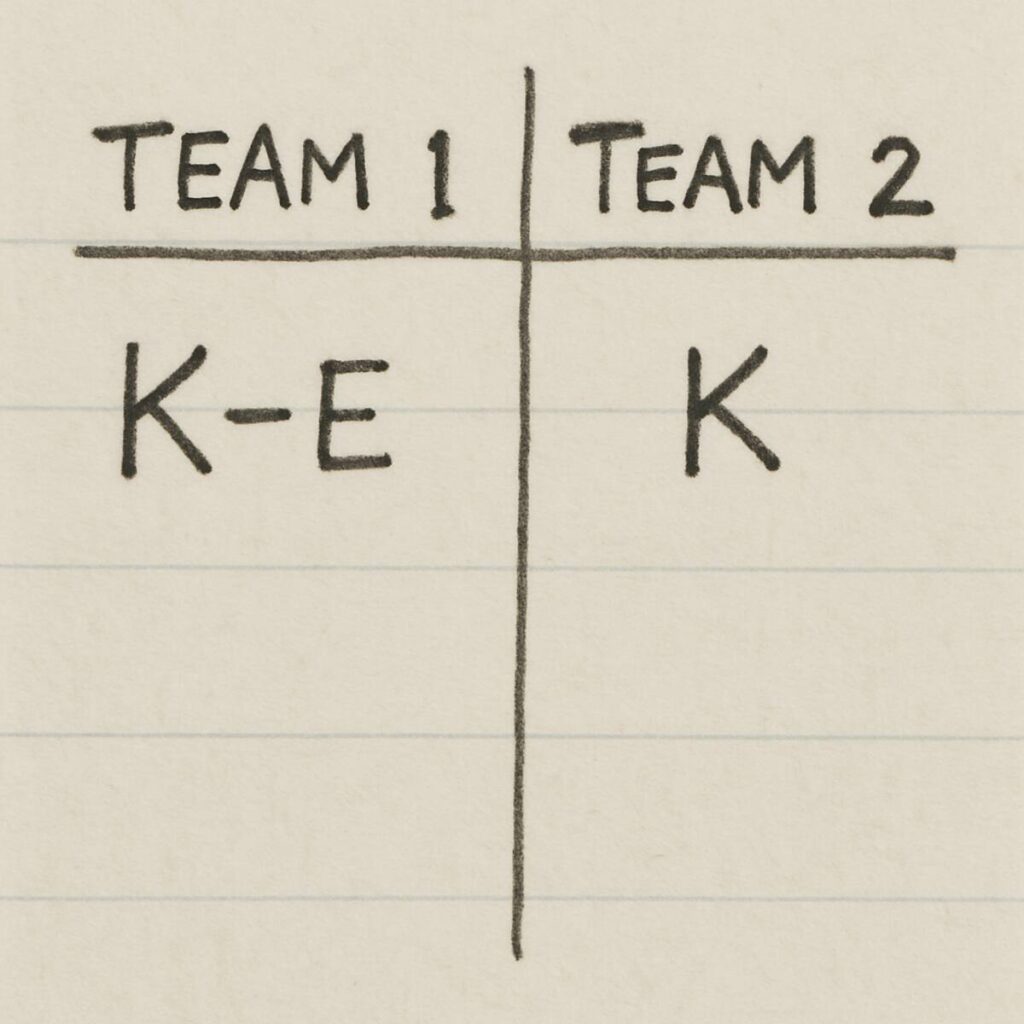
Winning a single round with a dramatic “Kent!” or a clever “Cut!” is a thrill, but it’s just one step toward overall victory. The biggest mistake new players make is losing track of the score, because every single call, right or wrong, contributes to the final outcome. The scoring system in Kent is beautifully simple and turns the game into a tense race to the finish line. After each round, points are awarded based on how it ended, and a new round begins until one team has won the game.
The most common way to play is to a total of four points. Many groups like to track this by spelling out the name of the game itself: the first point gets you a “K,” the second an “E,” and so on. The first team to spell K-E-N-T wins! Just be careful, because mistakes will set you back. If your team makes an incorrect call, you lose a point, potentially erasing a letter you worked hard to earn.
Here’s a quick summary of how scoring works:
- Correct “Kent!” call: +1 point for your team.
- Correct “Cut!” call: +1 point for your team.
- Incorrect “Kent!” or “Cut!” call: The other team gets +1 point.
- Winning the Game: The first team to reach 4 points (K-E-N-T) wins.
Your Mistake-Free Checklist to Playing Your First Game of Kent
To make your first round a success, use this quick-reference guide to avoid the most common mistakes for beginners. It simplifies everything from the deal to the final, victorious “Kent!” call.
Your First Game Cheat Sheet
- DO: Sit directly across from your partner.
- DON’T: Sit right next to them.
- DO: Swap only one card from the center on your turn.
- DON’T: Take a handful or swap more than one.
- DO: Secretly signal when you have four-of-a-kind.
- DON’T: Call “Kent!” for your own hand.
- DO: Have your partner yell “Kent!” when they see your signal.
- DON’T: Wait until you’re sure the other team knows.
With these common errors out of the way, the only thing left is to bring the game to life. So grab a standard deck of cards, find at least three friends, and deal your first hand. Decide on your secret signal, keep a close watch on your opponents, and get ready for an evening filled with sneaky glances, knowing smiles, and bursts of laughter. Enjoy the game!
