


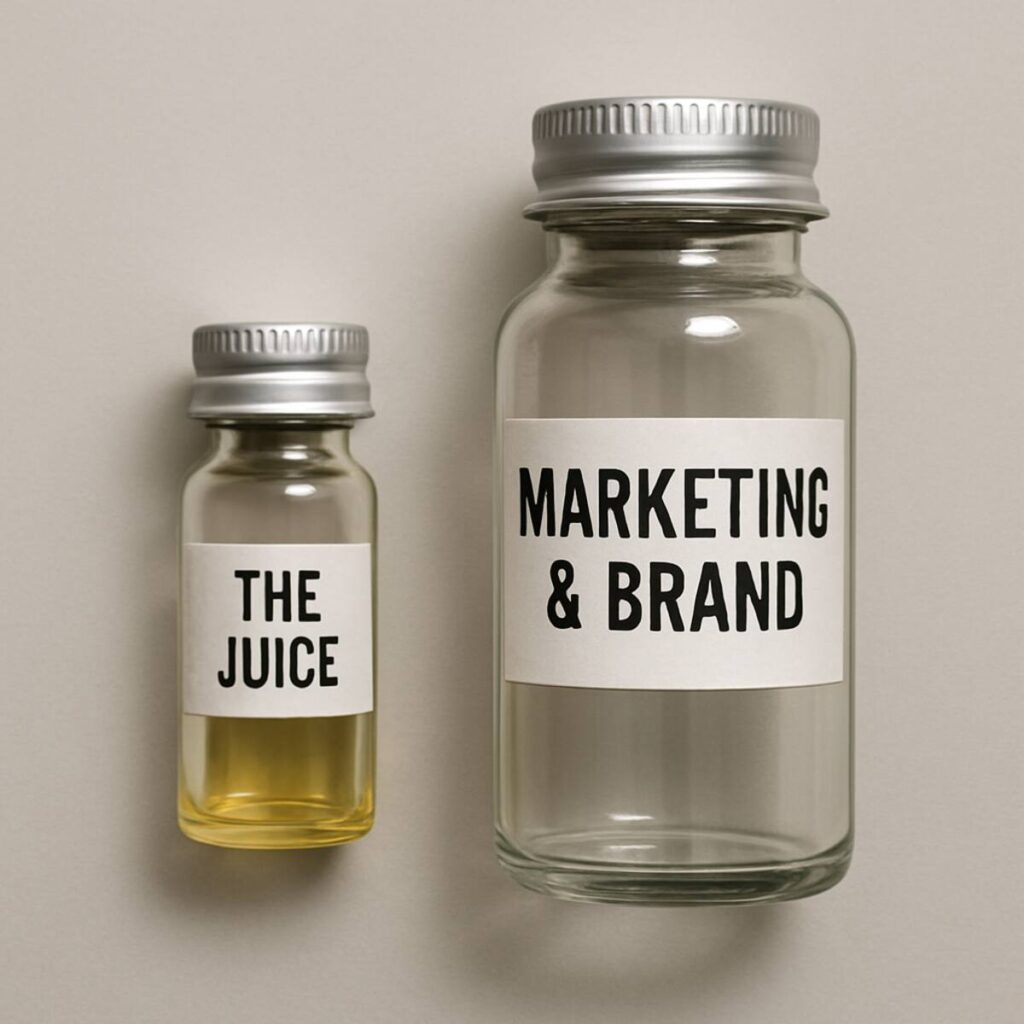
You’re standing at a glossy department store counter, admiring a $300 bottle of perfume that smells like a dream, but the price tag is a complete nightmare. Why does smelling good cost so much? According to industry data, consumers usually pay for massive celebrity marketing campaigns, elaborate custom packaging, and a famous brand name rather than just the beautiful liquid inside. This stark reality has fueled a booming market for affordable designer perfume alternatives. Have the Best information about Fragrance Duplication.
There is a massive distinction between totally legal perfume dupes and illegal counterfeits. A counterfeit tries to scam you by copying trademarked logos and deceptive bottle designs to pass as the original. In contrast, a dupe proudly operates under its own brand name, offering a legal, “inspired-by” recipe that captures the same essence without the deception.
How exactly do these independent companies so perfectly mimic that iconic luxury fragrance? The secret is a high-tech machine known as GC-MS. Much like a grocery store scanner reads a barcode to identify a product, this machine reads the expensive liquid molecule by molecule, giving perfumers the exact blueprint needed to recreate your favorite scent.
Why Your $300 Perfume Only Costs $5 to Manufacture
In the beauty industry, the markup-to-manufacturing ratio is staggering; the actual aromatic compounds inside that beautiful bottle are surprisingly inexpensive. When you compare an authentic perfume vs budget clones, you aren’t necessarily paying for better-smelling ingredients—you are mostly paying for an expensive illusion.
Imagine a high-end bakery where the flour and sugar cost pennies, but the fancy cardboard box costs a fortune. Breaking down a typical $300 designer scent, the expenses look roughly like this:
- The Juice: $5 to $10 for the actual liquid scent
- The Bottle: $15 to $20 for custom glass and packaging
- Marketing: $40 to $50 for celebrity ads and campaigns
- Retail Markup: $100 to $150 for department store fees
- Profit: The remaining balance goes directly to the brand
Because the raw recipe is so affordable, creating cost-effective luxury scent options is entirely possible for smaller companies. Independent manufacturers simply skip the celebrity television ads and heavy custom glass, pouring their budget directly into matching the fragrance instead. But without the original perfumer handing over their notes, how do these alternative brands figure out the exact ingredients of a $300 bottle?
Meet the ‘Scent Scanner’: How Gas Chromatography Decodes Secret Formulas
Perfume houses guard their signature formulas like state secrets, locking them away in corporate vaults. However, keeping a scent entirely hidden is virtually impossible in the modern era. Scientists utilize a machine that can “read” any liquid and reveal exactly what is inside.
This remarkable piece of equipment is known as a Gas Chromatography-Mass Spectrometer, or GC-MS. During the gas chromatography scent analysis process, a tiny sample of the expensive designer perfume is heated until it vaporizes. As the vapor travels through the machine’s internal tubes, the complex fragrance separates into its individual building blocks, isolating every single ingredient so it can be independently evaluated.
Think of the next step as matching suspects to a database, because every molecule possesses its own unique structural fingerprint. Once separated, the mass spectrometer measures these chemical fingerprints against a massive digital library of known fragrance materials. This makes reverse engineering aromatic compounds highly accurate, effectively handing an independent brand the exact chemical blueprint of that $300 bottle within hours.
Yet, possessing a raw list of ingredients doesn’t automatically guarantee a perfect duplicate. Knowing that a famous cake contains flour, sugar, and vanilla doesn’t tell you the precise order to mix them or how to balance the delicate layers. Translating this computerized data into a luxurious, long-lasting fragrance requires a human touch.
The Perfumer’s Kitchen: Turning a Digital Recipe into a Wearable Masterpiece
Stepping away from the lab, the raw data lands with a master perfumer, affectionately called a “Nose.” While a machine can easily identify a fragrance oil’s molecular composition, simply listing the chemicals doesn’t guarantee a beautiful scent. When consumers ask how perfume clones are made so accurately, the answer lies in this human touch. The Nose acts like an executive chef, interpreting a computer-generated recipe and relying on trained intuition to give the formula its soul.
Transforming that digital printout into a wearable alternative requires a meticulous balancing act. If a designer originally features an incredibly expensive, rare, or restricted orchid, the perfumer must select a high-quality, lab-created substitute that keeps costs down while meeting modern safety standards. They expertly tinker with the machine’s blueprint through four essential steps:
- Identifying crucial trace elements that the scanner may have missed.
- Swapping rare, unpredictable naturals for safe, consistent synthetics.
- Adjusting the individual notes to ensure a smooth, lingering fade.
- Testing the newly balanced blend on actual human skin.
Ultimately, even with a brilliant artist at the helm, a fragrance is only as good as the carrier liquids binding it together. Rushing this final step can turn a luxurious inspiration into a harsh disappointment.
Why Some Dupes Smell Like Rubbing Alcohol (And How to Avoid Them)
We’ve all sprayed a bargain bottle only to be hit with an astringent blast that stings the nose. Since perfume is heavily diluted with alcohol to carry the scent, the quality of that alcohol matters immensely. Luxury brands use high-grade, virtually odorless perfumer’s alcohol. Conversely, rushed budget brands often use cheaper, lower-grade ethanol. This harsh carrier liquid immediately clashes with the delicate fragrance oils, creating that recognizable chemical sting right out of the bottle.
Time is another crucial ingredient separating a masterful alternative from a cheap knockoff. Just like a rich stew tastes better the next day after the flavors mingle, a freshly bottled fragrance needs time to “marry.” This resting period, called maceration, allows oils and alcohol to seamlessly bind. When identifying top notes in scent matches, a properly macerated dupe instantly reveals its bright opening layers. If companies skip this aging phase to save money, those beautiful first scents get trapped behind an aggressive wall of alcohol.
Patience is your best tool for evaluating the quality of inspired perfume. Never judge a new bottle by those first five seconds. Instead, wait a few minutes for the liquid to evaporate and the true “dry down” to emerge on your skin. Once the initial spray settles, the remaining oils tell the real story.
The ‘Lego vs. The Tree’ Rule: Synthetic vs. Natural Ingredients
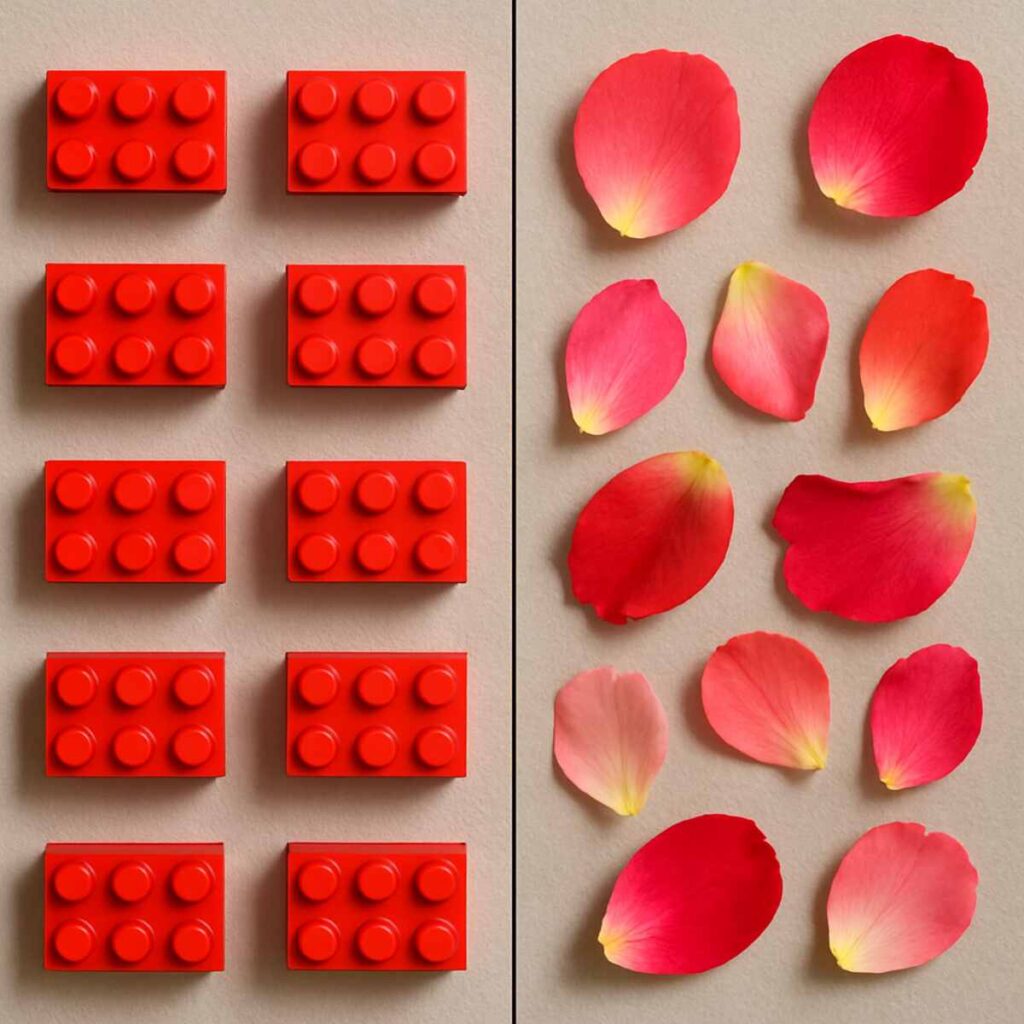
You might assume that luxury perfumes use only fresh flowers, while affordable alternatives rely on cheap chemicals. In reality, both rely heavily on lab-created aroma chemicals. Think of natural ingredients like hand-carved wood; every piece varies slightly depending on that year’s weather and soil. Conversely, synthetic molecules are like perfect plastic Lego bricks. Because their fragrance oil molecular composition is strictly controlled in a lab, every single batch smells absolutely identical, guaranteeing your favorite bottle never suddenly changes.
Shattering the “natural is always better” myth reveals why these engineered ingredients are actually highly beneficial to consumers. Synthetics are intentionally designed to remove the unpredictable allergens frequently found in raw botanical extracts. Furthermore, they provide completely vegan, cruelty-free alternatives to traditionally harvested animal musks. This predictable molecular stability also dramatically improves designer vs inspired fragrance longevity, allowing both expensive originals and budget-friendly alternatives to anchor to your skin for hours without fading.
Once perfumers access these standardized building blocks, recreating a luxury scent becomes a matter of matching the recipe. Advanced technology readily identifies these components, enabling independent brands to assemble identical fragrance structures cost-effectively. But if anyone can precisely reverse-engineer a famous formula, is it illegal to copy a scent?
Is It Illegal to Copy a Scent? Understanding the Boundaries of Trademarks
Have you ever wondered how affordable brands mimic a $300 perfume without getting sued? It comes down to how the law views recipes. A fragrance is legally considered a “functional creation.” Just like nobody can patent the taste of a classic chocolate chip cookie, a smell cannot be patented. Because the liquid formula is legally unprotected, independent perfumers can safely reconstruct the exact experience.
Luxury houses instead fiercely protect their visual identity. Look at what companies strictly control:
- The iconic brand name and logo
- The specific title of the perfume
- The custom shape of the glass bottle
Conversely, they cannot trademark the scent itself. This distinction separates a legal dupe from an illegal counterfeit. A counterfeit tricks you with fake logos, while legitimate alternatives use distinct packaging and operate with total transparency.
Shopping within this legal gray area means you can confidently buy budget-friendly inspirations without supporting black-market scams. You are simply purchasing a legally reconstructed recipe. While the smell might perfectly match the original right out of the bottle, performance is a completely different story.
How to Test if a Dupe Actually Lasts: Sillage and Longevity Explained
We’ve all bought a budget perfume only to have it disappear by lunchtime. To truly compare designer vs inspired fragrance longevity, master the side-by-side test. Spray the expensive original on one paper strip and the affordable alternative on another. This reveals the initial match and its sillage—the perfumer’s term for the invisible scent trail you leave behind as you walk through a room.
Paper alone won’t tell the whole story, though. You must test these formulas on your body because human skin acts like an active ingredient in the recipe. Depending on your skin chemistry and hydration levels, your body might “eat” certain perfumes incredibly fast. A dupe smelling perfect on cardboard might evaporate completely once it mixes with your unique body heat.
Surviving the workday depends on the fragrance’s foundation. Think of perfume “notes” as layers; the base notes—like rich vanilla or heavy woods—are the anchors. When choosing long-lasting fragrance oils, look for these high-quality, dense ingredients that stick to your skin long after the lighter, fruity top notes have completely vanished.
Evaluating true staying power simply requires patience, letting both the designer liquid and the inspiration dry down for a few hours. Once you understand how these recipes interact with your unique chemistry, you will never waste cash on a fading formula again.
Your Action Plan for Building a Luxury Fragrance Library on a Budget
You no longer have to stare at a $300 price tag and wonder if you are paying for magic or just marketing. By understanding how modern technology deconstructs a fragrance and how skilled perfumers rebuild the recipe, you are finally in on the secret. Finding high-quality perfume dupes isn’t about settling for a cheap counterfeit—it is about leveraging science to make smart choices that respect your budget.
Run any potential new scent through this four-step verification process before adding it to your collection:
- Check the notes: Ensure the alternative lists the same top, middle, and base layers as the high-end original.
- Read the reviews: Look specifically for comments on longevity and the “dry down” to ensure it doesn’t fade into a harsh alcohol smell.
- Look for inspired-by terminology: Reputable brands are transparent about being a legal alternative, never a fake posing as the original.
- Start with a sample: Let the liquid sit on your skin for a few hours to see how it interacts with your unique body chemistry.
Try swapping just one expensive daily wear for a thoughtfully crafted alternative and notice how beautifully it performs. You now have the ultimate tools to curate a luxurious signature scent profile without the designer debt.