


Remember the awe of watching Daenerys’s dragons take flight for the first time? For years, Game of Thrones was more than just a show—it was a cultural event that left an indelible mark on millions of fans. While the main story has concluded, the connection to Westeros remains powerful. But what if you could hold a tangible piece of that story, something far more personal than a t-shirt or a coffee mug? Check out Soju88 Daftar to know more
This is where the world of Game of Thrones trading cards comes in. Forget the flimsy cardboard of your childhood; these are high-quality collectibles designed for fans. Think of them as miniature works of art, capturing the show’s stunning cinematography, beloved characters, and iconic moments on cards you can hold in your hand. Each pack is a new journey back into the Seven Kingdoms.
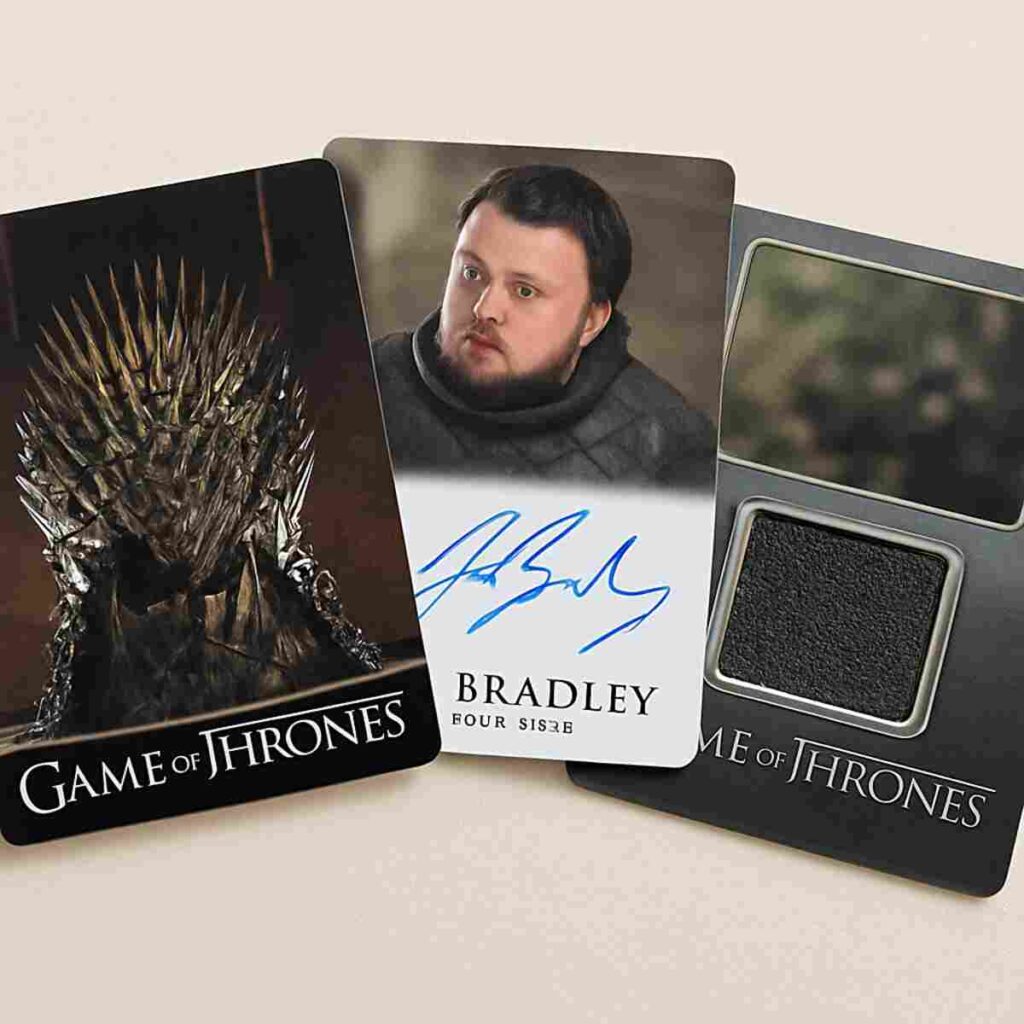
Beyond the beautiful base cards, however, lies the real magic. The creators of these sets, such as Rittenhouse Archives, worked directly with HBO to include some truly incredible finds. You can discover cards personally autographed by stars like Peter Dinklage and Lena Headey, or “relic cards” that contain an actual piece of a screen-worn costume—a swatch of a Stark banner or a sliver of a Dothraki leather. It’s the closest most fans will ever get to owning a genuine artefact from the show.
Finding these special cards is like a treasure hunt, offering a completely new way to engage with the series you love. But with so many different sets and card types, where does a beginner even start? This guide explains everything from basic sets to tracking down your first autograph so you can start building a collection worthy of the Iron Throne.
What Makes an Autograph Card the ‘Iron Throne’ of Collecting?
While many cards capture stunning moments from the series, some offer a direct, physical connection to the people who brought Westeros to life. These are autograph cards: cards that have been personally hand-signed by the actors. Finding one of these in a pack is the ultimate thrill for many fans because it transforms a piece of cardboard into a genuine celebrity collectible—a tangible link to stars like Peter Dinklage or Kit Harington.
But why is one signature more coveted than another? The answer lies in simple rarity. Just as in the show, not all houses hold equal power, and not all autographs carry the same weight. A card signed by a major star who rarely signed is far more scarce than one from an actor who signed thousands. Card manufacturers like Rittenhouse Archives release information on which actors signed for a set and sometimes even how limited their signatures are, creating a clear hierarchy of desirability.
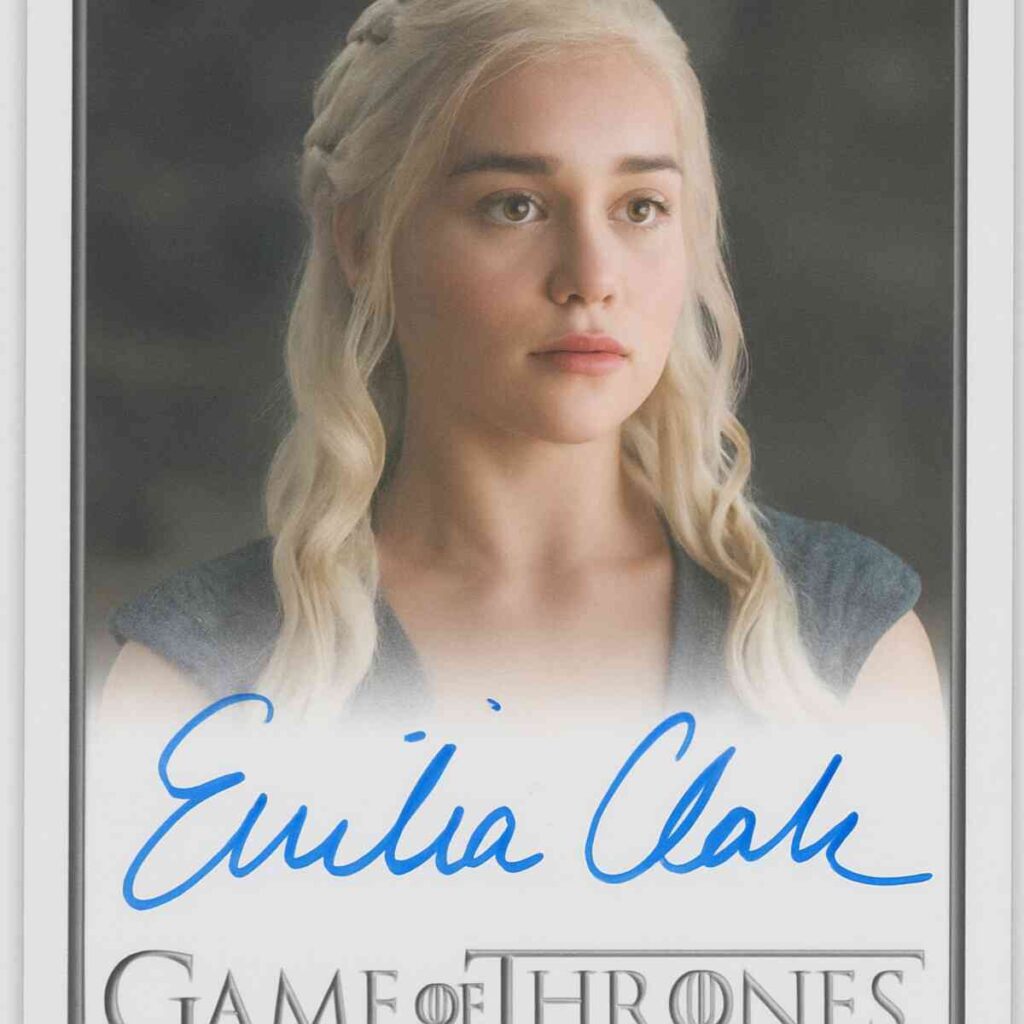
This scarcity makes certain cards the holy grails of the hobby. For Game of Thrones collectors, an autograph from Emilia Clarke (Daenerys Targaryen) is often considered the ‘Iron Throne’—the ultimate prize. Because she was the show’s biggest star and her signatures are exceptionally rare, her cards command the highest values and are the most sought-after on the market. Owning one is seen as the pinnacle of a collection.
Of course, the signatures of beloved heroes and reviled villains are not the only treasures buried in these packs. For those who want to get even closer to the action, there’s another type of card that lets you own a literal piece of the Seven Kingdoms.
How You Can Actually Own a Piece of a Character’s Costume
That desire to get closer to the story finds its answer in what the hobby calls relic cards or costume cards. These are incredibly special cards that feature a small, authentic piece of a costume worn by an actor during the filming of the show. Imagine a card featuring Jon Snow that has a tiny swatch of the thick, black cloak he wore at Castle Black embedded right into it. You’re no longer just looking at a picture; you’re holding a genuine fragment of the Night’s Watch.
The materials used in these cards span the entire world of Westeros. Card maker Rittenhouse Archives, which produced many of the Game of Thrones sets, worked with HBO to acquire actual screen-used outfits. This means you could find a card with a piece of a lavish Lannister gown, a swatch from one of Daenerys’s Targaryen dresses, or even a bit of rugged Dothraki leather. Each one is a miniature treasure chest, preserving a physical piece of a character’s on-screen journey.
While autographs connect you to the actor, these costume cards connect you directly to the character’s world. They are tangible artefacts from the set, turning part of your collection into a small museum of Westerosi history. Of course, just as with the heroes and villains of the show, not all cards are created equal. The rarity of a simple base card compared to a prized autograph or a unique costume piece creates a fascinating hierarchy for fans to explore.
From Smallfolk to Kings: Understanding Game of Thrones Card Rarity
When you open a pack of cards, how do you know if you’ve found a treasure worthy of the Iron Throne or just another common soldier? Card rarity is a lot like the social structure of Westeros. Just as you have smallfolk, knights, and kings, your collection has a clear hierarchy that helps you spot the difference between a common find and a true treasure.
This hierarchy creates three main tiers of rarity, which is the first step in any Game of Thrones card value lookup:
- Common (The Smallfolk): These are your base cards. Featuring beautiful shots of characters and scenes, they form the foundation of every set and are the most plentiful cards in any pack.
- Uncommon (The Knights & Lords): This is where you find insert cards. These are special, themed mini-sets scattered into packs that are harder to find than base cards. You might discover a set dedicated to iconic quotes, another showcasing the different House sigils, or one featuring the “Beautiful Death” poster art. They offer a fun collecting challenge without the extreme rarity of the top tier.
- Rare (The Kings & Queens): These are the major “hits” that collectors chase. This tier includes the autograph and relic cards, as well as other exceptionally scarce cards like those made of metal, often called “Valyrian Steel” cards. Pulling one of these is like being crowned a king.
Knowing the difference between a common card and a rare insert is what makes the hunt so thrilling. But who, exactly, was forging all these different treasures for fans to find?
Who Forged These Cards? Rittenhouse Archives vs. Fantasy Flight Games
Not all Game of Thrones cards are created equal, and knowing the “who” behind them is crucial to finding what you’re looking for. Two main companies forged cards for the franchise: Rittenhouse Archives and Fantasy Flight Games. Think of them like two different blacksmiths: one creates collectible treasures tied directly to the show, while the other crafts tools for a strategy game.
If your goal is to own a piece of the epic HBO series, you want cards from Rittenhouse Archives. They are the official producer of the collectible HBO GoT trading cards, packed with stunning photos from the series, actor autographs, and pieces of screen-worn costumes. Every rare “hit” we’ve discussed—like a signature from Emilia Clarke or a swatch of Tyrion’s tunic—comes from one of the many Rittenhouse Archives GoT sets.
On the other hand, Fantasy Flight Games created a card game with beautiful, original artwork inspired by the world of Westeros. These cards are designed for gameplay, with stats and abilities, not for collecting show memorabilia. The distinction is simple: Rittenhouse is for collecting pieces of the show’s history. It’s within those Rittenhouse sets that you’ll find the ultimate prizes for any fan.
The Ultimate Prize: Which GoT Autograph Cards Are Most Valuable?
Once you start the hunt for autographs, one question naturally arises: which ones are the most valuable? Just like the Great Houses of Westeros, not all signatures carry the same weight. The value of a Game of Thrones autograph card isn’t random; it’s a powerful combination of two key factors: the actor’s global fame and, crucially, exactly how many cards they were willing to sign.
Some actors signed thousands of cards over the years, making their autographs accessible. Others, especially main stars who became worldwide celebrities, signed far fewer. This scarcity is what turns a cool collectible into a legendary treasure. When an actor as big as Kit Harington (Jon Snow) signs a limited number of cards, finding one of his autographs becomes as challenging as uniting the North.
While many signatures are prized, a few consistently sit on the Iron Throne of collectibility. These are the most valuable Game of Thrones cards that fans and collectors hunt for relentlessly.
Top-Tier Autographs to Hunt For:
- Emilia Clarke (Daenerys Targaryen): The Mother of Dragons is also the queen of the GoT card market. Her autographs, especially from the show’s early seasons, are incredibly sought-after.
- Kit Harington (Jon Snow): He was notoriously one of the most limited signers in the main cast, making his signature exceptionally rare and valuable.
- Peter Dinklage (Tyrion Lannister): A huge fan favorite and multi-award-winning actor, his autograph is always in high demand.
Landing a signature from this top tier is a serious quest, as the price for these GoT cast autograph cards often runs into the hundreds of dollars on secondary markets like eBay. They are the ultimate prize for a dedicated fan, but signed cards aren’t the only treasures forged for the realm.
Beyond Signatures: The Hunt for ‘Valyrian Steel’ and Other Rare Inserts
While an autograph offers a personal link to an actor, some of the most stunning Game of Thrones cards are treasured for their artistry and unique construction. Chief among these are the legendary Valyrian Steel inserts. Just as the famed swords were the pinnacle of Westerosi blacksmithing, these cards are the pinnacle of card design. Instead of cardboard, they are forged from real metal, featuring intricate, laser die-cut portraits of characters like Daenerys or the Night King. Holding one feels substantial and special, like you’ve found a relic from the Citadel itself.
This extreme rarity has a name in the hobby: a ‘case hit.’ Imagine a large, sealed shipping case filled with a dozen or more boxes of card packs. A card is considered a case hit if you are only likely to find one in that entire case. It’s the trading card equivalent of finding a needle in a haystack, which makes the moment of discovery an unforgettable thrill for any fan. These aren’t cards you expect to find in every other pack; they are the grand prizes that make the hunt so exciting.
In addition to metal cards, another one-of-a-kind treasure awaits lucky collectors: the sketch card. These are miniature, original works of art drawn directly onto the card by an officially licensed artist. Each one is a unique depiction of a character or scene—no two are ever the same. Pulling a sketch card of Tyrion Lannister means you own a piece of art that no one else in the world has.
Where to Begin Your Hunt: Finding Your First Cards
You generally have two main choices for starting your collection, each offering a different kind of thrill. You can either buy a sealed box of card packs for the surprise and excitement of the hunt, or you can purchase single cards to go directly after a specific character or moment you love.
Buying a sealed box is like opening a treasure chest from Essos. Inside, you’ll find numerous packs, and opening each one is a mini-adventure. You’re guaranteed to get a wide variety of the beautiful “base cards” featuring the show’s massive cast, which is perfect for starting a collection. While every box gives you a chance to find those ultra-rare autographs or metal cards, there’s no guarantee. This path is for those who truly love the gamble and the joy of discovery.
Alternatively, if your heart is set on one specific card—say, an autograph of Tyrion Lannister—your best bet is to buy it as a single. This approach takes all the guesswork out of collecting. The biggest marketplace for this is eBay, which acts as a massive digital bazaar where collectors from all over the world sell individual cards. It’s the perfect place to track down that one missing piece for your collection or to look up the value of a specific Game of Thrones card.
For a complete beginner, the easiest way to start is simply to look. Head over to eBay and type in the name of your favorite character—”Jon Snow autograph” or “Daenerys costume card”—and just browse. You don’t have to buy anything, but it will give you a fantastic feel for what’s out there. Once you find that perfect card, you’ll want to make sure it’s protected from any harm, whether it’s a rampaging Dothraki horde or just a spilled drink.
How to Protect Your Treasures from the Long Night: Storing Your Cards Safely
Thankfully, you don’t need a vault in the Iron Bank of Braavos to keep your cards safe. Whether you’ve pulled a common card of Winterfell or a rare autograph of Daenerys Targaryen, protecting them from scratches, bends, and dust is easy and affordable. The most basic and essential item is a soft plastic sleeve, often called a “penny sleeve,” which should be the first line of defense for every card you want to keep. They’re the Unsullied of card protection—simple, effective, and numerous.
For your more valuable cards—the kings and queens of your collection, like autographs or costume relics—you’ll want an extra layer of armour. This is where a “toploader” comes in. A toploader is a rigid plastic holder that you slide the sleeved card into. It prevents bends and adds a sturdy, durable layer of security. The rest of your common “base cards” can be beautifully organized and displayed in a standard 3-ring binder using 9-pocket plastic pages, letting you flip through your collection like a history book of Westeros.
Your starter storage kit is incredibly simple and can be found online or at most stores that sell collectibles. All you need are these three items.
Your Starter Storage Kit:
- Penny Sleeves (for all cards)
- Toploaders (for your rare cards)
- A 3-Ring Binder with 9-pocket pages (for your base set)
This simple system will keep your collection looking pristine for years. For the absolute crown jewels, however, there’s an even higher level of protection and authentication called “grading.”
What Does It Mean to Get a Game of Thrones Card ‘Graded’?
For a card that’s as rare and important as the Iron Throne itself—like a signature from Kit Harington or a piece of Daenerys’s dragon-riding costume—you might want the ultimate seal of approval. This is where card grading comes in. Think of it as sending a valuable scroll to the Citadel for verification. You mail your card to a trusted, third-party company where experts will authenticate that it’s real and meticulously assess its physical condition, looking for any flaws like soft corners or surface scratches.
After this inspection, the card is permanently sealed in a hard, tamper-proof plastic case with a label that displays its official grade. This process, called encapsulation, does two critical things: it provides the ultimate protection against damage and acts as an official certificate of authenticity and condition. This is especially important for anyone doing a Game of Thrones card value lookup, as a card in perfect, professionally-verified condition is always more desirable.
While there are a few trusted companies, a name you’ll see constantly when people discuss the best Game of Thrones card grading services is PSA. Having a rare card returned to you with a high grade from a service like PSA grading is the final step in preserving its legacy. It transforms your prized possession from a simple collectible into a verified piece of television history.
Are GoT Cards a Good Investment for a Fan?
With all this talk of rarity and high grades, it’s natural to wonder: are GoT cards a good investment? It’s true that some cards, especially rare autographs of major stars like Emilia Clarke, can sell for hundreds or even thousands of dollars. However, approaching the hobby purely as a financial strategy can be as risky as challenging the Mountain to a duel.
The market for any collectible is unpredictable; the Game of Thrones card value can rise and fall based on fan interest and market trends over time. What is guaranteed, however, is the thrill of the hunt and the joy of owning a physical piece of a story you love. That feeling of finally tracking down a card of your favorite character is a return on investment that a bank account can’t measure.
Ultimately, the best way to view these cards is as an investment in your fandom. While the most valuable Game of Thrones cards will always generate excitement, their true worth for a fan is the connection they represent. Building a collection you’re proud of—one that reminds you of Tyrion’s wit or Arya’s journey—is a prize in itself, and a much more rewarding goal than simply chasing dollar signs.
Your First Steps into the World of Westeros Collecting
What was once just a piece of cardboard can now be seen as the entire realm of Westeros in miniature. You can spot the difference between a common “base card” and a rare “relic” holding a real piece of a character’s costume. You’ve learned the language of the hobby and can recognize a true treasure when you see one. This new knowledge is your map to a new kind of fandom.
If you’re ready to take the first step, here’s a simple quest to start collecting with a fun, low-risk approach.
Your 3-Step Starter Quest
- Pick a favorite character and browse eBay for their cards to see what you like. This is pure window-shopping to discover what’s out there.
- Buy a few ‘penny sleeves’ and ‘toploaders’ online or at a local shop. This is the simplest way to protect any cards you decide to acquire.
- Consider buying just one loose pack from a set like ‘Inflexions’ or ‘Valyrian Steel.’ Experience the thrill of the hunt and the fun of opening it for yourself.
Ultimately, collecting is not about finding the most valuable card—it’s about finding your card. It’s about owning a tangible connection to a moment or character that mattered to you. Whether that’s a beautiful card of the Iron Throne or an autograph from your favourite actor, you’re no longer just a viewer of the story. You are now a curator of its memory.