


Have you ever spent all your credits on engine upgrades in a game like Forza or Gran Turismo, only to find your 1,500-horsepower monster is now completely undrivable? It’s a common frustration. You hit the accelerator, the tires scream, and you immediately spin into a wall. This happens because the secret to going faster isn’t always adding more power—it’s about making the power you have usable. Check out ufag7 to know more
After upgrading, you probably stumbled upon the “Tuning” screen: a wall of sliders, graphs, and mysterious terms like “Camber” and “Toe.” It looks like an engineering exam you’re destined to fail. Yet, the key to unlocking your car’s potential lies in understanding just two or three of these settings. In practice, a handful of small adjustments deliver 80% of the results, transforming your car from a wild beast into a track-day weapon.
Think of car tuning less like a mechanic’s job and more like teaching a powerful athlete some manners and coordination. A massive engine is useless if the car can’t put that force onto the pavement without losing control. The goal of hp tuning game online isn’t just about a higher top speed; it’s about balance, grip, and control, which are the true secrets to faster lap times.
Before you even touch a slider, diagnose the problem by asking a few simple questions:
- What is my car’s biggest problem? (e.g., spins out, won’t turn, slow on straights)
- What kind of track am I on? (lots of corners or long straights?)
- What is my goal? (a faster lap, a more stable car, or just more fun?)
Answering these questions turns tuning from a guessing game into a clear mission. This guide will focus on the essential settings that give you the most control, breaking down how to use them to fix your car’s specific problems one simple adjustment at a time.
Why Your 1,000 HP Monster Build Keeps Losing Races
You’ve poured all your in-game credits into creating the ultimate speed machine, but on the track, it’s a disaster. You floor the gas, and the car just sits there, tires transforming into smoke. When you finally get moving, the slightest tap of the accelerator in a corner sends you spinning. It’s like trying to sprint a marathon on a freshly polished bowling lane.
The problem isn’t the power; it’s the balance. Think of horsepower as a wild animal and your car’s grip as its leash. If the animal is too strong for the leash, it’s going to run wild. In a car, when the engine’s power completely overwhelms what the tires can handle, that power is wasted. A player in a well-balanced, 500-horsepower car will almost always be faster than a player in an untamed 1,000-horsepower monster. To win, you need to get power and grip working together.
The First and Most Important Tune: Getting Your Tires Right
Your journey to taming that high-horsepower car begins where the rubber meets the road. All the power in the world is useless if it can’t be transferred to the asphalt through a surprisingly small area called the contact patch—the literal patch of tire touching the ground at any moment. Your first goal in tuning is to make this patch as effective as possible.
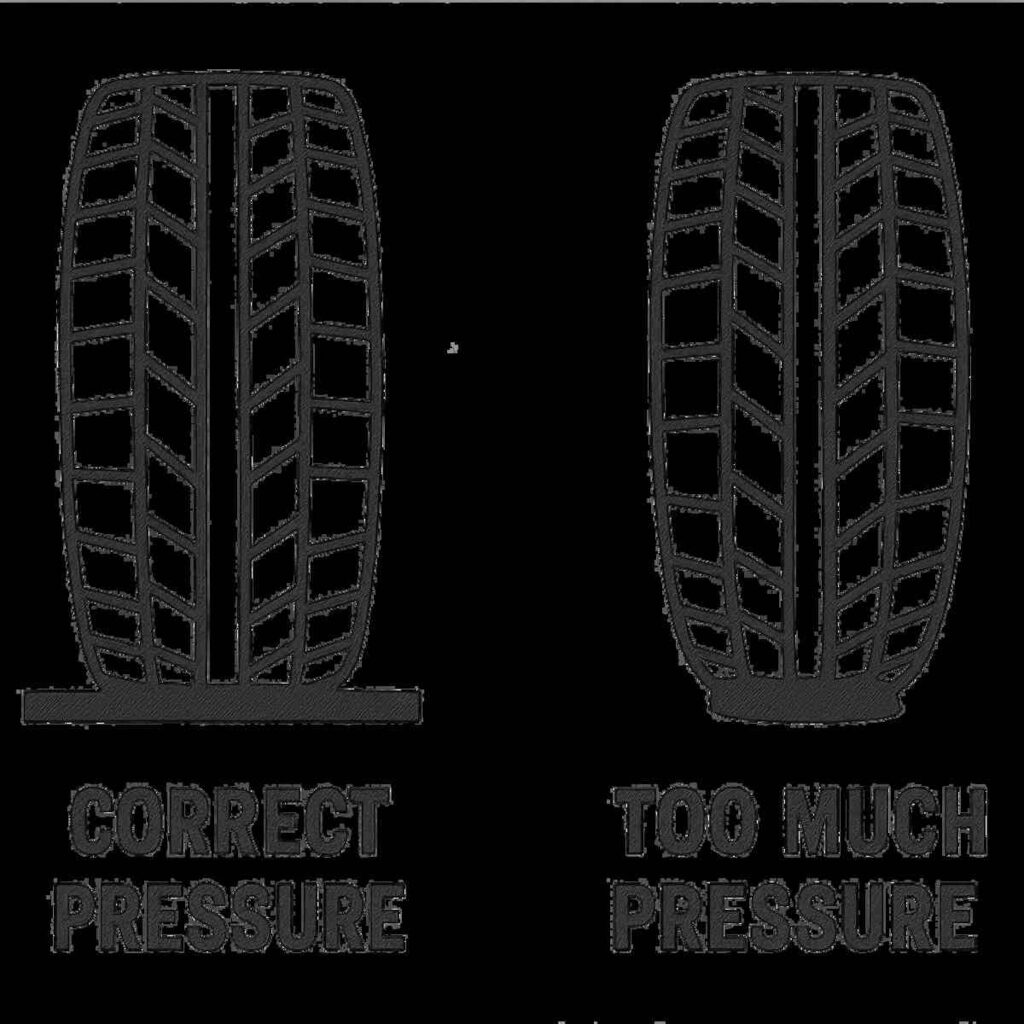
Think of tire pressure like inflating a basketball. Overinflate it, and the tire becomes too round and hard, shrinking your contact patch to a thin strip. This makes the car feel skittish and lose grip easily. Underinflate it, and the tire gets mushy and unresponsive. A core principle in any car tuning for beginners guide is finding that sweet spot where the pressure creates the flattest, widest contact patch for maximum grip.
Beyond pressure, you’ll have a choice of tire compound. This is the difference between grippy, soft-soled running shoes and hard, durable dress shoes. Softer racing tires are like super-sticky chewing gum; they provide incredible grip but wear out quickly. Harder street tires have less ultimate grip but last much longer. This choice is a classic dilemma in games from Forza Motorsport vs Gran Turismo 7 tuning: do you want peak performance for one perfect lap, or consistency for a long race?
Getting this balance of pressure and compound right is your foundation. Once your car feels solidly connected to the track, you can use the air itself to push the car down even harder.
Aero 101: How to Use Air to Stick Your Car to the Track
Have you ever stuck your hand out of a moving car’s window? Angle it slightly, and you feel the air push it upwards. The wings and splitters on your race car are designed to do the exact opposite; they’re shaped to use that same airflow to push the car down onto the track. This invisible force is called downforce, and it’s like adding temporary weight that helps your tires bite into the pavement for incredible cornering grip.
But as with everything in tuning, there’s a catch. The more you angle a wing for downforce, the more resistance you feel. That resistance is called drag, and it acts like a small parachute, limiting your car’s top speed. This trade-off is fundamental: more downforce gives you faster, grippier cornering, but the increased drag will make you slower on the long straights.
The right setting depends on the track. For a circuit with lots of tight turns, adding downforce will help you carry more speed through corners and set faster lap times. Conversely, on a track dominated by long straightaways, you’ll want to lower the downforce to reduce drag and achieve the highest possible top speed.
Acceleration vs. Top Speed: The Easiest Way to Tune Your Gearing
Just as you balance downforce and drag, you must also balance how your car uses its power. The simplest way to do this is with the ‘Final Drive’ gear ratio. Don’t let the name intimidate you; this is exactly like the gears on a bicycle. A ‘low’ or ‘short’ gear setting is like using the easiest gear on your bike—it’s simple to get up to speed quickly, but you’ll soon be spinning your legs furiously without going any faster. This is quick acceleration.
On the other hand, a ‘tall’ or ‘long’ gear setting is like your bike’s hardest gear. It takes more effort to get going, but you can reach a much higher top speed. Most tuning menus simplify this with a single ‘Final Drive’ slider. Moving it towards ‘Acceleration’ gives you that punchy, quick-off-the-line feeling but lowers your maximum speed. Moving it towards ‘Speed’ does the opposite.
So how do you set it perfectly? Here’s a simple trick for understanding gear ratios for racing games: take your car to the longest straight on the track. If you hit your car’s rev limiter (the “red line”) well before the braking zone, your gearing is too short. Nudge the slider one or two clicks toward ‘Speed’ and try again. If you can’t even get close to the red line, your gearing might be too tall.
Problem: “My Car Won’t Turn!” — How to Fix Understeer
You’ve set your gears perfectly and are flying down the straight. You brake for the upcoming corner, turn the steering wheel… but the car seems to ignore you, plowing straight ahead as if its front tires are on ice. This is understeer.
That frustrating feeling has a simple cause: your front tires have lost grip before your rear tires have. Think of it like trying to turn a heavy shopping cart on a slippery floor; you can turn the handle all you want, but the whole thing just wants to slide forward.
One of the best ways to fix this is by adjusting your suspension. To give your front tires more grip, you need to soften the front end. This is a core lesson in how to tune suspension for grip. Go into the tuning menu and find the “Springs” or “Anti-Roll Bars” for the front of the car, then move the slider a few clicks toward “Soft.” This allows the car’s weight to shift forward more easily during braking and turning, planting the front tires onto the pavement.
Quick Fixes for Understeer:
- Soften Front Suspension: Make the front springs or anti-roll bars softer.
- Add Front Aero: Increase your front downforce to help push the tires onto the track.
- Adjust Tire Pressure: Try lowering the front tire pressure by one or two clicks.
Problem: “My Car Keeps Spinning Out!” — How to Tame Oversteer
On the flip side of a car that won’t turn is one that turns too much. You tap the steering wheel, and suddenly the back end of your car tries to overtake the front, sending you into a spin. If you’ve ever felt the car “fishtail” uncontrollably, you’ve experienced oversteer. This time, it’s a shopping cart with a wobbly back wheel that wants to swing out on every turn.
This often happens for one of two reasons. The first is that your rear tires have lost grip while your front tires are still holding on. The second, more common cause is overpowering the rear tires. When you have a ton of power, stomping on the gas as you exit a corner can easily break traction and cause a spin. This is where learning “throttle control” becomes just as important as the tune itself.
Fortunately, taming oversteer involves the same tools you used for understeer, just applied to the opposite end of the car. To give your rear tires more bite, make the rear suspension softer. Go into your tuning menu, find the rear “Springs” or “Anti-Roll Bars,” and move the slider a few clicks toward “Soft.” This helps the car’s weight press down on the rear tires, giving you more stability.
Quick Fixes for Oversteer:
- Soften Rear Suspension: Make the rear springs or anti-roll bars softer.
- Add Rear Aero: Increase rear downforce to plant the back of the car on the track.
- Be Gentle on the Throttle: Apply power smoothly as you straighten out of a corner.
Suspension 101: Finding the Sweet Spot Between “Bouncy” and “Stiff”
Think about the difference between cushioned running shoes and hard dress shoes. One is soft and absorbs every pebble, while the other is stiff, letting you feel everything. A “soft” suspension soaks up bumps and helps the car feel smooth, but can cause it to lean or “roll” heavily in corners. A “stiff” suspension makes the car feel incredibly responsive and sharp, but it can be twitchy and lose grip over bumps. Learning how to tune suspension for grip is about finding the right balance for the track you’re on.
Related to this is Ride Height, which is how low your car’s body sits. Lowering your car also lowers its “center of gravity.” Imagine trying to tip over a tall, narrow box versus a short, flat one; the short one is far more stable. By lowering your ride height, you make your car more stable in corners.
However, slamming the car as low as it can go can cause the bottom to scrape the ground on a bumpy track or over tall curbs. This is called “bottoming out,” and it instantly unsettles the car, causing a major loss of grip. The goal is to set the ride height as low as possible for stability, but just high enough to avoid scraping.
What Games Let You Tune Cars? A Quick Guide for Beginners
Now that you understand some basics, you might wonder what games let you tune cars effectively. The best place for a beginner to start is in “sim-cade” racers like the Forza Motorsport and Gran Turismo series. Their tuning menus are detailed enough to make a real difference but often include helpful descriptions and are forgiving if you get something wrong.
On the other end of the spectrum are deep simulators, often considered the best car tuner games for PC. Titles like Assetto Corsa offer an incredibly realistic experience where every tiny adjustment has a profound effect. Think of these as the “expert level”—a fantastic world to dive into once you’ve mastered the fundamentals.
Of course, tuning isn’t always about chasing lap times. Many arcade racers and free online car modification games like the Need for Speed series let you customize visuals and install powerful upgrades with simpler performance sliders. Regardless of the game, the key to learning is to avoid changing everything at once.
The Golden Rule of Tuning: Change One Thing at a Time
It’s tempting to jump into the tuning menu and start moving every slider. The problem? If your car suddenly gets worse—or even better—you’ll have no idea which of the ten changes you made was responsible. The single most important rule is to change only one thing at a time. Think of it as a simple science experiment.
This methodical approach is the core of any good tuning guide. Here is a simple process to follow:
- The Baseline: Pick a track and drive 3-5 clean laps with the car’s current setup. Write down your best lap time. This is your starting point.
- The Change: Go into the tuning menu and adjust one single setting. For example, move the ‘Final Drive’ gear ratio slider one click toward “Speed.”
- The Test: Head back to the same track and drive another 3-5 clean laps.
- The Analysis: Compare your new best time to your baseline. Was it faster? Did the car feel better or worse? If it was an improvement, keep the change. If not, change it back.
By following this loop, you build a custom tune one validated step at a time, ensuring every adjustment helps. You’ll know exactly what each setting does because you’ll have felt the result yourself.
Advanced Tuning Concepts
Once you’re comfortable adjusting gearing and aerodynamics, you’ll start noticing more subtle settings. You might see a setting for the “Differential,” which helps your car turn more smoothly under power by managing how the left and right wheels spin. Another is “Brake Bias,” which adjusts whether your front or rear brakes do more work, helping you stay stable during heavy braking.
Further down the rabbit hole, you’ll find engine swap options in racing games, which can completely transform a car’s character. For more detail, ECU remapping in car simulator games acts like a software update for your engine, changing how it delivers power. This, along with turbo vs supercharger game tuning, lets you decide if you want a sudden kick of power or a smoother, predictable surge of speed. The real power of these advanced tools is only unlocked once you have a solid feel for the fundamentals.
Your First Tune: A Simple Action Plan to Get Started Today
That intimidating tuning menu is now your personal toolbox. You went from seeing horsepower as the ultimate goal to understanding that the real secret of speed is balance. Taming a powerful car isn’t about complex physics, but about making deliberate, simple choices to transform how it feels. Your journey from confused to confident starts with a single change.
Your 10-Minute Tuning Plan
- Pick your favorite car and a track you know well.
- Start with the “Big Three”: Check your tires, aero, and gearing first. Is the track tight or fast? Adjust your gearing’s Final Drive one click.
- Address the biggest problem: Does it understeer or oversteer? Make one small aero or spring adjustment.
- Test it out! Drive a few laps and feel the difference.
That’s it. That loop—test, change one thing, test again—is the fundamental secret to mastering any game that lets you tune cars. Each lap will teach you something new, turning frustration into control. Go make that first small change, feel what it does, and you’re officially on your way.